
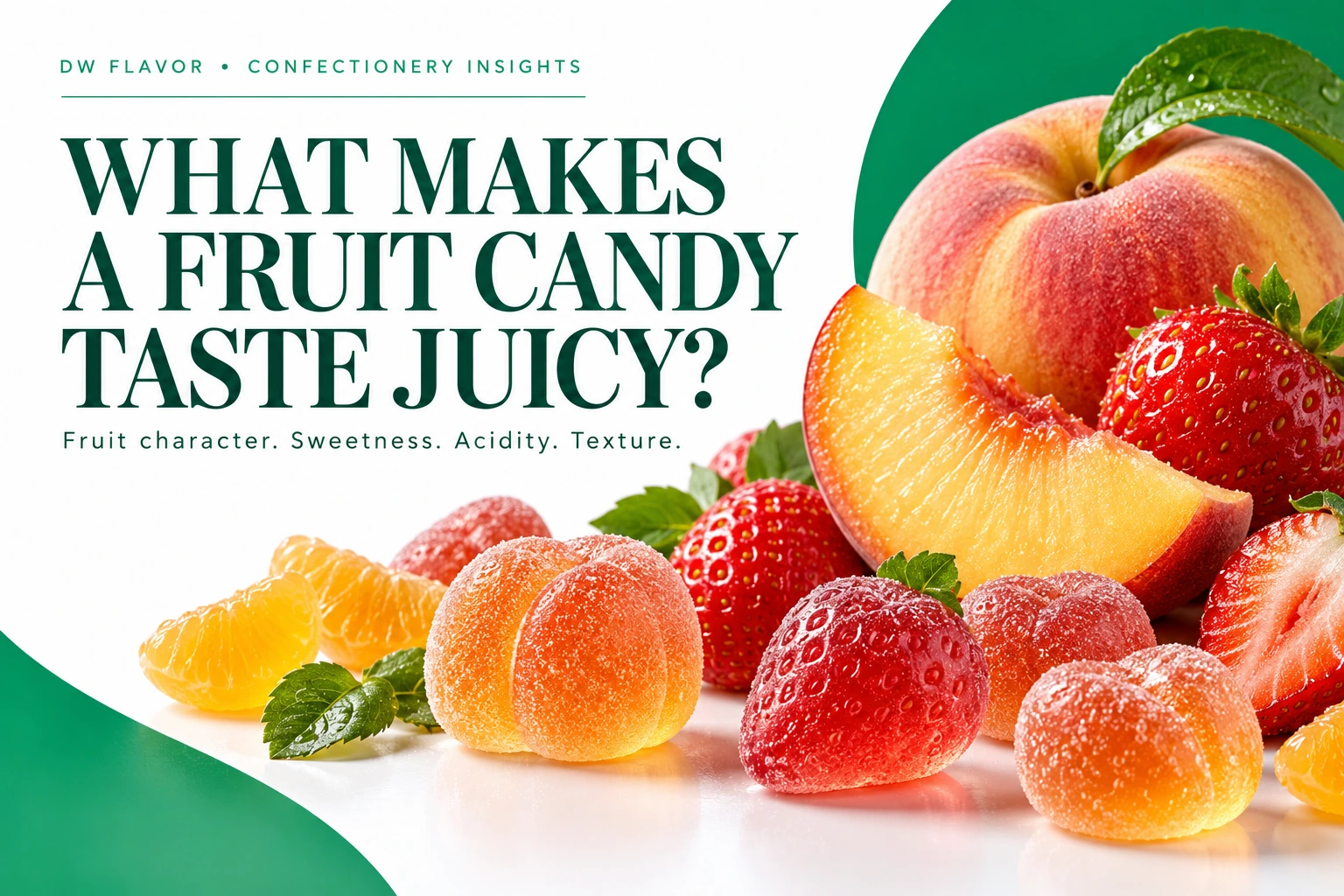
What Makes a Fruit Candy Taste Juicy?
Bite into a piece of fruit candy, and sometimes the impression is immediate: bright fruit notes, refreshing tartness and a flavor that seems to unfold as you chew. Even without a liquid center, the candy can bring a juicy piece of fruit to mind. For food developers, this raises an interesting question. If “juicy” does…
Bite into a piece of fruit candy, and sometimes the impression is immediate: bright fruit notes, refreshing tartness and a flavor that seems to unfold as you chew. Even without a liquid center, the candy can bring a juicy piece of fruit to mind.
For food developers, this raises an interesting question. If “juicy” does not always mean that juice is physically released, what creates that impression?
In fruit candy, juiciness is best understood as a combined sensory experience. Aroma, sweetness, acidity and texture all contribute. Increasing fruit flavor intensity may make a candy more noticeable, but creating a convincing juicy character requires these elements to work together.
Start with a Clear Fruit Character
Before developing juiciness, it helps to define the kind of fruit experience the candy should deliver.
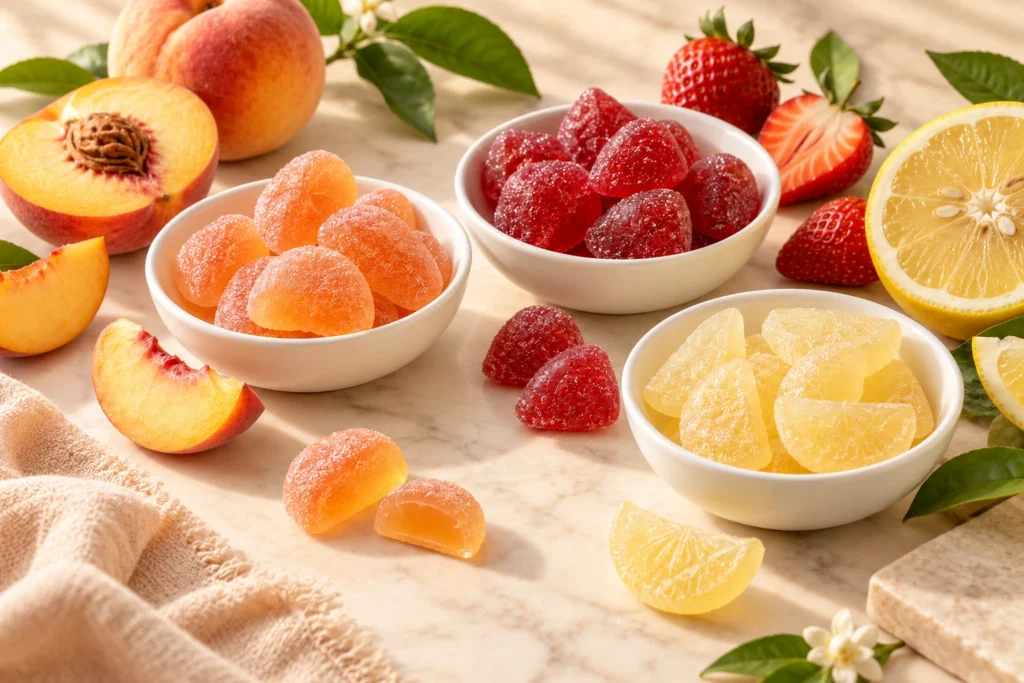
A strawberry profile can suggest freshly cut fruit, ripe sweetness or cooked jam. A peach candy might emphasize delicate floral notes, soft ripe flesh or a brighter, tangier character. Each direction can be appealing, but they create different expectations.
For a fresh, juicy concept, the flavor needs to communicate more than a recognizable fruit name. It should express the particular qualities associated with the intended fruit experience. A profile dominated by cooked or heavily sweet notes may be suitable for a jam-inspired candy, while a fresh-fruit concept may call for a different balance.
This makes a precise development brief useful. “A ripe peach character with a bright opening and a clean finish” provides a clearer target than simply “a stronger peach flavor.”
Sweetness and Acidity Need to Work Together
Sweetness provides much of the familiar appeal of fruit candy, while acidity helps shape its tartness and overall fruit impression.
However, adding more acid does not automatically make a candy taste juicier. An excessively sharp opening may dominate the fruit character. At the other extreme, a very sweet profile with little refreshing contrast may feel heavy for a concept intended to suggest fresh fruit.
The useful target depends on the fruit and the product positioning. A mellow peach gummy and a sharp green apple chew should not necessarily share the same acid–sweet balance.
Development teams should therefore assess sweetness and acidity alongside the fruit flavor. If a sample lacks freshness, the next step may involve adjusting that balance rather than increasing the flavor dosage alone.
Consider How the Flavor Develops During Eating
A candy is experienced over time. The first taste, the middle of the chew and the finish all contribute to the overall impression.
A sour coating, for example, can create an immediate burst of tartness. Once it dissolves, the center of the candy needs to carry the intended fruit character. If the opening is vivid but the fruit becomes indistinct afterward, the experience may feel less complete than expected.
A useful tasting exercise is to follow the product through its different stages. Is the fruit recognizable at the beginning? Does it remain clear as the candy is chewed or dissolved? Does the sweetness eventually dominate? Is the finish refreshing, lingering or overly sharp?
The aim is not necessarily to maintain the same intensity throughout. It is to create an enjoyable progression that fits the product concept.
Texture Helps Shape the Juicy Impression
A soft gummy, a firm fruit chew and a hard candy can carry the same fruit concept while delivering very different experiences.
Texture changes how the candy is eaten, including how long it stays in the mouth and how it breaks down. These differences make it important to evaluate flavor in the intended candy format.
For a gummy positioned around fresh fruit, the development team may seek a yielding bite that works with the flavor concept. A firmer chew may suit a longer-lasting experience, while a hard candy requires evaluation as it gradually dissolves.
There is no single texture that guarantees juiciness. The practical question is whether the texture supports the intended impression. A suitable flavor profile still needs to be tested in the actual formulation rather than judged only in a simplified tasting solution.
A Liquid Center Is One Option
A liquid-filled candy can provide a physical burst that supports a juicy concept. Yet the filling still needs to work with the surrounding shell or gummy.
The outer layer and the center may differ in sweetness, acidity and flavor intensity. Evaluating them separately can help identify formulation issues, but the complete candy must also be tasted in its intended proportions.
A strongly flavored filling does not automatically create a balanced product. The transition from the outer layer to the center should feel deliberate, and the combined finish should remain pleasant.
For candies without a liquid center, the development focus shifts toward creating a convincing fruit impression through the flavor profile, acid–sweet balance and texture.
Evaluate the Finished Candy Under Consistent Conditions
Directly smelling an aroma sample cannot establish how juicy the finished candy will taste.
The candy base, manufacturing process, coating and texture all form part of the final experience. Development trials should therefore use the intended application and conditions that are representative of production.
When comparing samples, keep the evaluation conditions consistent. Differences in sample age, serving temperature, piece size or coating level can make the comparison harder to interpret.
It is also useful to taste more than one piece. A sharp coating may be exciting at first, but the product should remain enjoyable over a realistic portion. This broader assessment helps distinguish an attention-grabbing opening from a well-developed eating experience.
Ask More Specific Questions During Tasting
“Does it taste juicy?” is a useful starting question, but it may not explain why a sample succeeds or falls short.
More specific feedback can reveal the next development step. Does the fruit taste fresh, ripe, cooked or indistinct? Is the tartness refreshing or distracting? Does the fruit character last through the chew? Does the texture support the concept? Is the remaining taste pleasant?
It also helps to separate intensity from preference. A sample may have the strongest fruit flavor without being the most enjoyable or the most convincing match for the target concept.
Comparing a small set of controlled samples against an agreed reference can make these discussions more productive. Where possible, feedback from the intended consumers can help confirm whether the development team’s interpretation of “juicy” matches market expectations.
Turning a Juicy Concept into a Clear Development Brief
For manufacturers working with a flavor supplier, “juicy fruit candy” becomes a more useful request when supported by application details.
The brief should describe the candy format, target fruit character, desired sweetness and tartness, texture, coating or filling, and relevant manufacturing conditions. Reference products can help clarify the goal, especially when terms such as “fresh,” “ripe” and “juicy” mean different things to different people.
It is equally helpful to describe what should be avoided, such as a cooked fruit impression, an overly sharp opening or a heavy lingering finish.
For businesses exploring DW Flavor’s confectionery range, these details provide a clearer basis for sample selection and application trials. The goal is a fruit character that works naturally with the candy—from the first taste through the final chew—and makes the finished product enjoyable beyond its initial impact.