
Beyond Smoke: What Builds a Grilled Meat Flavor?
A convincing grilled meat flavor goes beyond smoke. Discover how browned notes, meat character, fatty impressions and seasoning work together—and why evaluating the finished food is essential to finding the right balance.
The aroma of grilled meat is familiar, yet difficult to describe with a single word. It may suggest a browned surface, warm fat, savory meat notes, a hint of smoke and the seasoning surrounding it all.
For food developers, this complexity creates an important distinction: making a product smokier does not necessarily make it taste more like grilled meat.
Whether the application is a meat product, a barbecue seasoning or a savory snack, a convincing grilled profile begins with a clear idea of the eating experience. Smoke can contribute to that impression, but it needs to work with the other elements of the finished food.
Grilled, Smoky and Roasted Are Different Descriptions
These terms often appear together in product briefs, but they describe different aspects of flavor.
A smoky note may bring to mind wood smoke or a smoke-cured food. A roasted character may suggest the browned surface of oven-cooked meat. A grilled profile can combine browned, savory and fatty impressions, sometimes accompanied by smoke and a lightly charred edge.
These descriptions overlap, but they are not interchangeable. A product can be smoky without delivering much browned meat character. It can also suggest grilled meat without an especially strong smoke note.
Defining these differences early helps make development discussions more precise. Instead of requesting “more barbecue flavor,” it is more useful to specify whether the sample needs a fuller meat character, a more pronounced browned note or a different level of smoke.
Browned Notes Give the Profile Its Cooked Character
One recognizable part of grilled meat is the contrast between its browned exterior and the meat beneath it.
During cooking, browning reactions contribute to the aroma of the surface. In flavor development, the resulting sensory direction may be described as roasted, toasted or browned, depending on the target.
For a grilled meat concept, these notes help establish the impression of cooking. However, their intensity still needs to suit the application. A lightly grilled chicken profile and a deeply browned beef profile call for different results.
Excessively dark or burnt impressions may distract from the intended meat character. The goal is to define the right degree of browning, rather than treating a stronger charred note as an automatic improvement.
Meat Character Gives the Flavor an Identity
“Grilled” describes a style of cooking, but it does not identify what is being cooked.
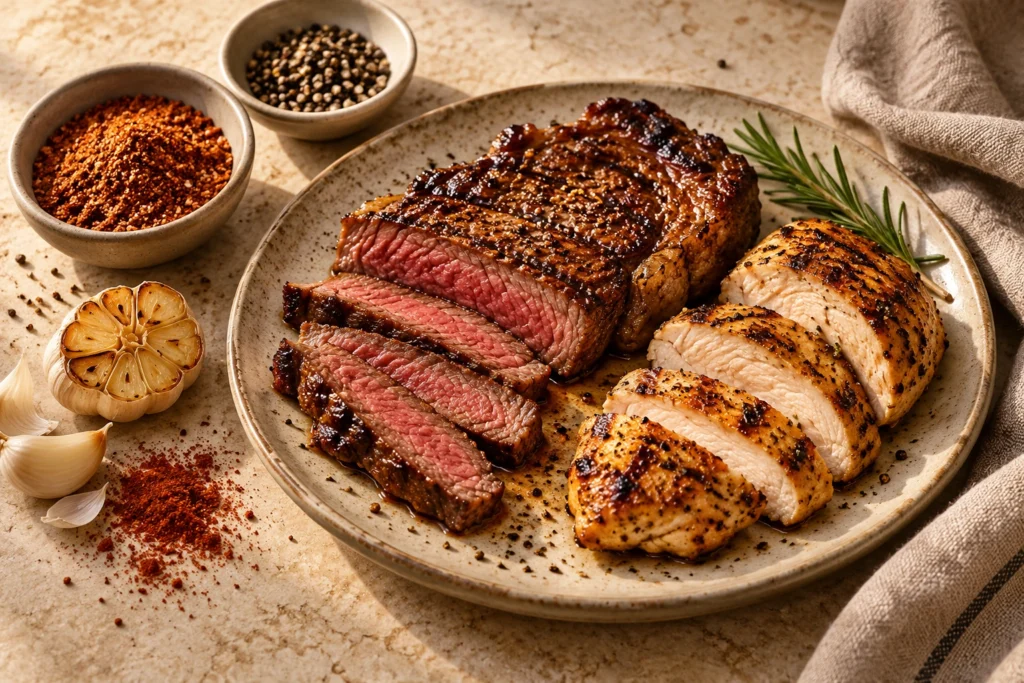
A grilled chicken concept and a grilled beef concept should have different sensory targets. The intended cut, cooking style and seasoning direction can further shape the brief.
For example, a mild chicken profile may need room for herbs or pepper, while a richer beef concept may call for a more pronounced savory body. These are development directions, not fixed formulas, and they need to be assessed in the intended product.
If the underlying meat character is unclear, increasing smoke or roasted notes may make the flavor stronger without making its identity more recognizable.
Fatty Notes Help Complete the Impression
The appeal of grilled meat is not limited to its browned surface. The impression of warm fat can also be part of the expected profile.
In a flavor brief, terms such as rich, rounded or fatty can help describe the desired direction, but they benefit from a reference product. Different evaluators may interpret these words differently.
It is also useful to distinguish an aromatic impression from physical mouthfeel. A flavor can contribute fatty or rich notes, while the actual sensation in the mouth also depends on the food’s formulation and structure.
This matters particularly when developing grilled meat flavors for snacks or other applications with a different base from meat. The complete product must deliver the intended experience; aroma alone cannot determine its texture or juiciness.
Smoke Should Have a Defined Role
Smoke can be a central feature or a supporting accent.
A smoke-forward barbecue snack may intentionally place it near the front of the experience. A lightly grilled meat product may need only a restrained smoky touch, allowing the meat and browned notes to remain clear.
The practical question is what smoke should contribute. Should it be immediately noticeable when the package opens? Should it appear during chewing? Should it remain in the finish?
Answering these questions is more helpful than simply increasing intensity. During tasting, developers should check whether smoke supports the concept or makes the product’s other characteristics harder to recognize.
Seasoning Shapes the Barbecue Style
Barbecue does not describe one universal flavor.
A sweet, tomato-led barbecue seasoning creates a different impression from a dry pepper rub, an herb-led grilled profile or a garlic-forward meat seasoning. The aromatic direction needs to fit that wider concept.
Sweetness, saltiness, acidity and spice should therefore be assessed alongside the grilled notes. A flavor sample may appear suitable on its own but feel less balanced once combined with the complete seasoning.
A clear brief should describe the intended style and the notes that should lead. If pepper and grilled beef are meant to be the main features, for example, smoke should be evaluated in relation to both.
The Food Base Changes the Development Task
A grilled meat flavor used in a potato chip cannot be evaluated in exactly the same way as one used in a sausage or a sauce.
Each base brings its own flavor, texture and eating pattern. A snack may deliver much of its seasoning from the surface, while a meat product or sauce presents the profile within a different structure.
This is why application testing is essential. A promising aroma sample still needs to be assessed at an appropriate use level in the finished recipe and under representative processing conditions.
For surface-seasoned snacks, the amount and distribution of seasoning also need attention. Uneven application can make one piece taste mild and another overwhelmingly smoky, making the flavor itself harder to judge.
Taste Beyond the Opening Aroma
The smell released when a package opens is only one stage of the experience.
During evaluation, follow the product from the initial aroma through chewing and into the finish. Is the meat character recognizable? Are the browned notes appropriate? Does smoke become dominant? Does the seasoning remain enjoyable over several bites?
A sample that makes a strong first impression may still need refinement if one note becomes tiring or the finish feels unbalanced.
Controlled comparisons help make these decisions clearer. When testing flavor dosage, keep the base recipe, processing and serving conditions consistent. If smoke level, sweetness and spice are all changed at once, it becomes harder to identify which adjustment improved the result.
A Clearer Brief Builds a Better Starting Point
A useful grilled meat flavor brief identifies the application, target meat character, cooking impression, role of smoke and seasoning style. It should also include relevant processing conditions and reference products where available.
Describing what to avoid is equally valuable. A team might want to limit burnt notes, a sweet sauce impression or a lingering smoke finish. These details help the supplier understand the intended direction before sample selection begins.
For manufacturers exploring DW Flavor’s meat and seasoning applications, a well-defined target provides a practical starting point for development. The aim is a recognizable grilled character that works with the food base and remains enjoyable from the opening aroma to the final bite.